Skip to content

Halvar and the Trolls (Year 3/4)

This lesson focuses on a Norwegian folk “Halvar and the Trolls”. Pupils discuss and consider what makes a stories or a specific story interesting/exciting. This leads into a consideration of the sparsity of the text and how it could be developed by adding literary devices and where they might be best deployed.

Here is an example of a pupil’s redraft of the folktale after the LTE lesson. Following a lesson of discussion, pupils in a Greenwich school, were invited to reimagine the folk tale adding more detail to the sparse descriptions found in the original text.

Blue Yellow (Year 3/4)

This lesson Let’s Think in English develops pupils understanding of symbolism through “Little blue and little yellow” by Leo Lionni. Pupils examine the front cover of the book before considering the characterisation of the colours and what this might suggest. Pupils are encouraged to recognise the story has a symbolic/metaphorical reading and to consider how they come to understand this.


After studying Blue Yellow pupils consider what meaning the book which appears to about two colours has for us. Here a Year 4 pupil in Islington provides their response.

An Islington Year 3 pupil after the LTE lesson creates an additional page for the story.

Wall in the Middle of the Book (Year 1/2)

This Let’s Think in English lesson develops pupils understanding of authorial intentions and their consequences on us as a reader through “The Wall in the Middle of the Book” by Jon Agee. Pupils consider why the wall was built and the claims of the knight that it is a good thing and that one side is safer than the other. Pupils are supported to clarify the difference between plot and author message before summarising what they believe the message to be. Pupils are placed in the role of the illustrator and consider alternatives to the ogre and animals and how changes might alter the message of the book.

A Year 2 pupil in an Islington school, reconsiders the idea of exclusion beyond the wall and transfers the context to real life. Here they consider how a metaphorical wall divides those who pollute and those who recycle.
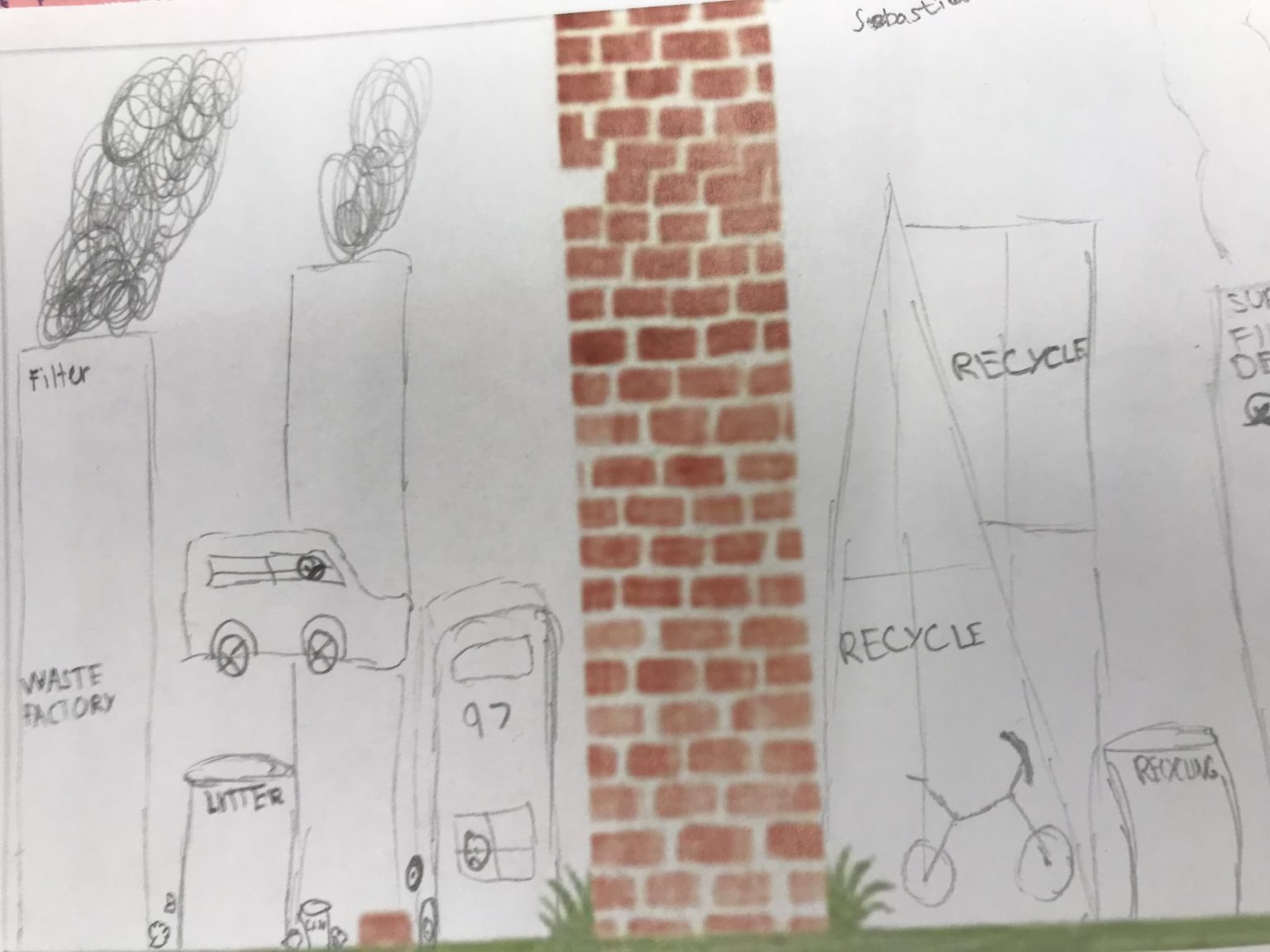
Another Year 2 pupil in an Islington school, sees the wall as representing inequality. In this instance, inequality to the disabled.
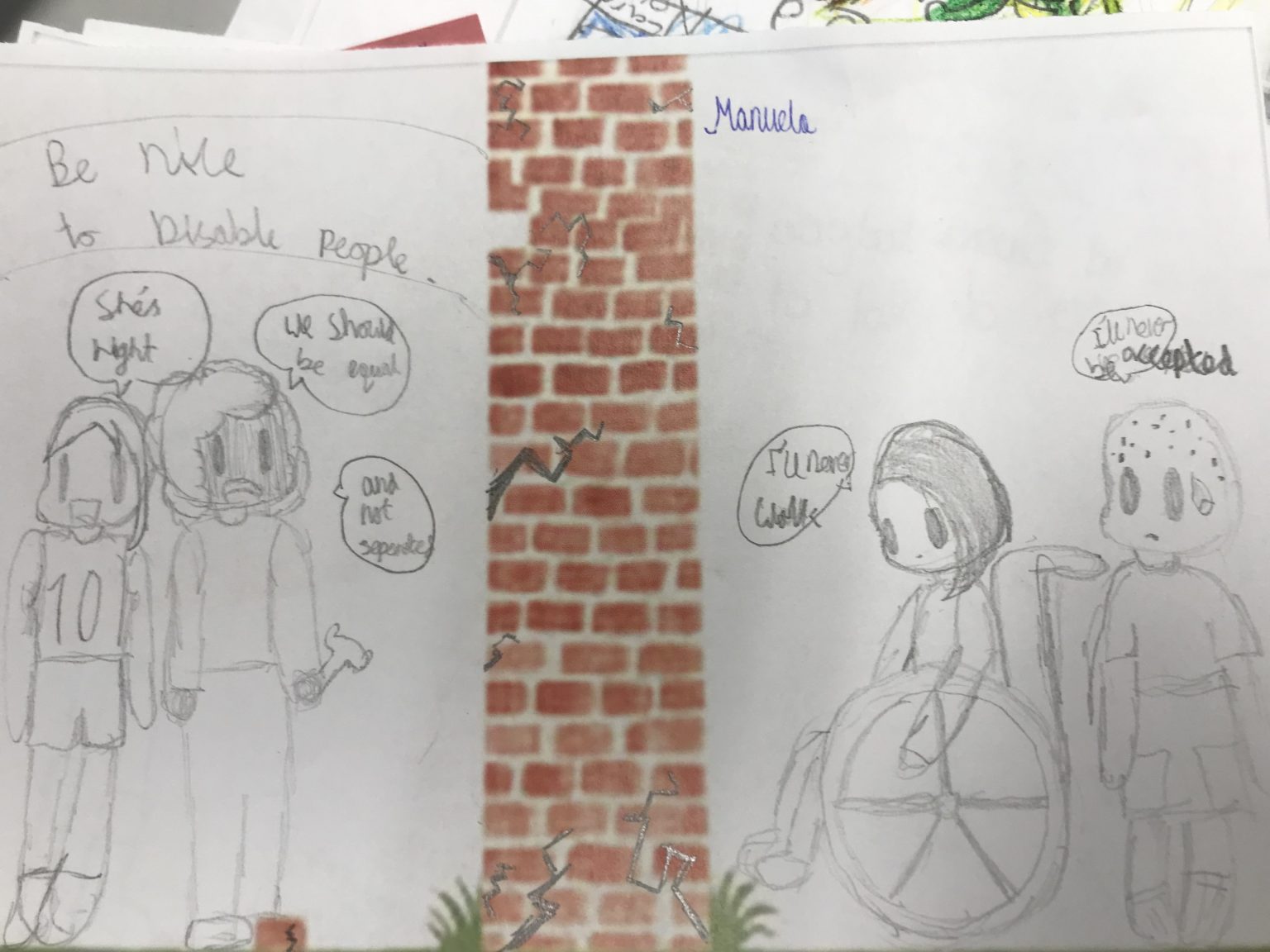
Here a group of Year 2 pupils in an Islington school, consider what the characters might be saying in different stages of the story.
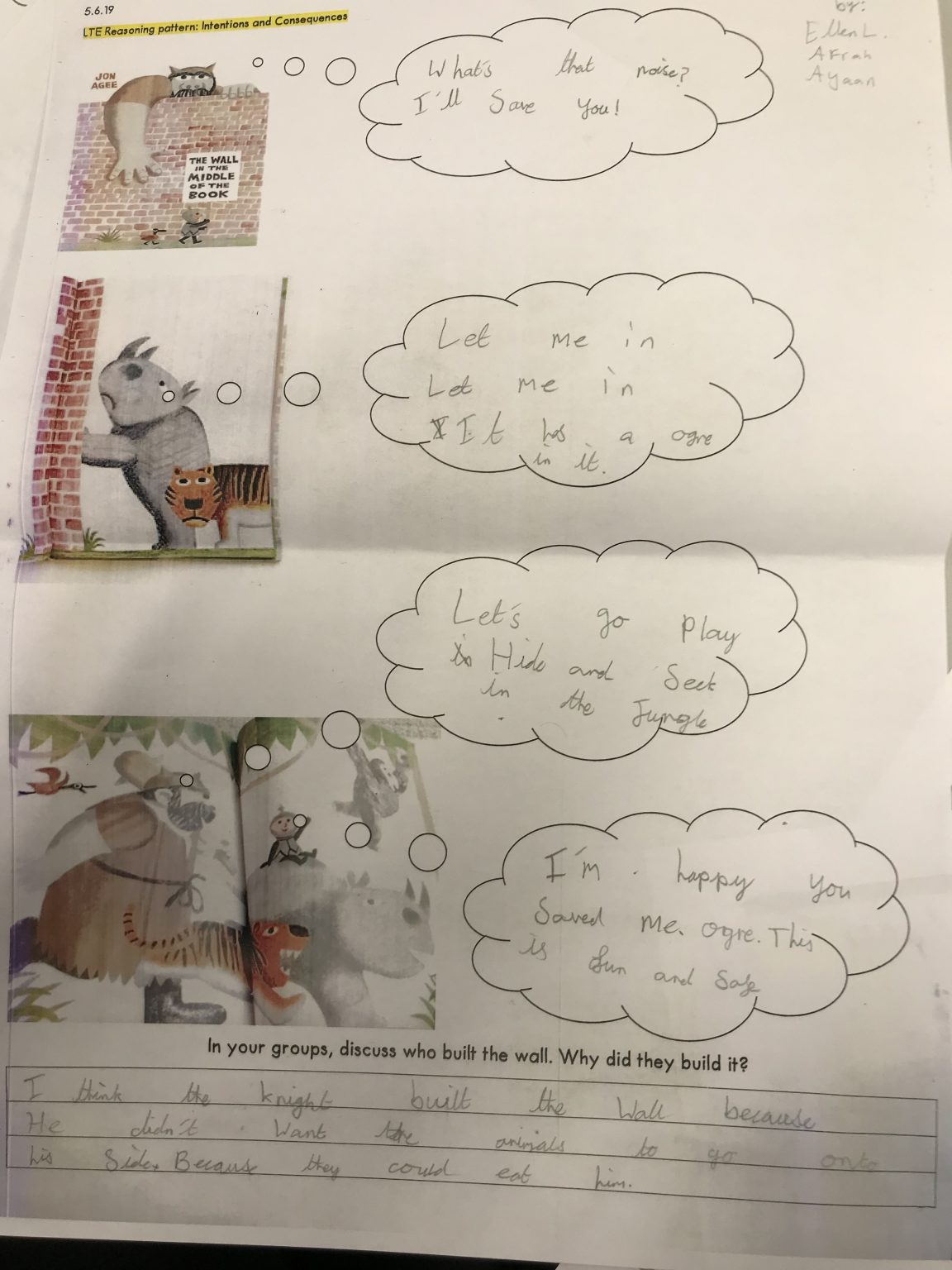
A group of Year 2 pupils in an Islington school make early predictions based on observations.
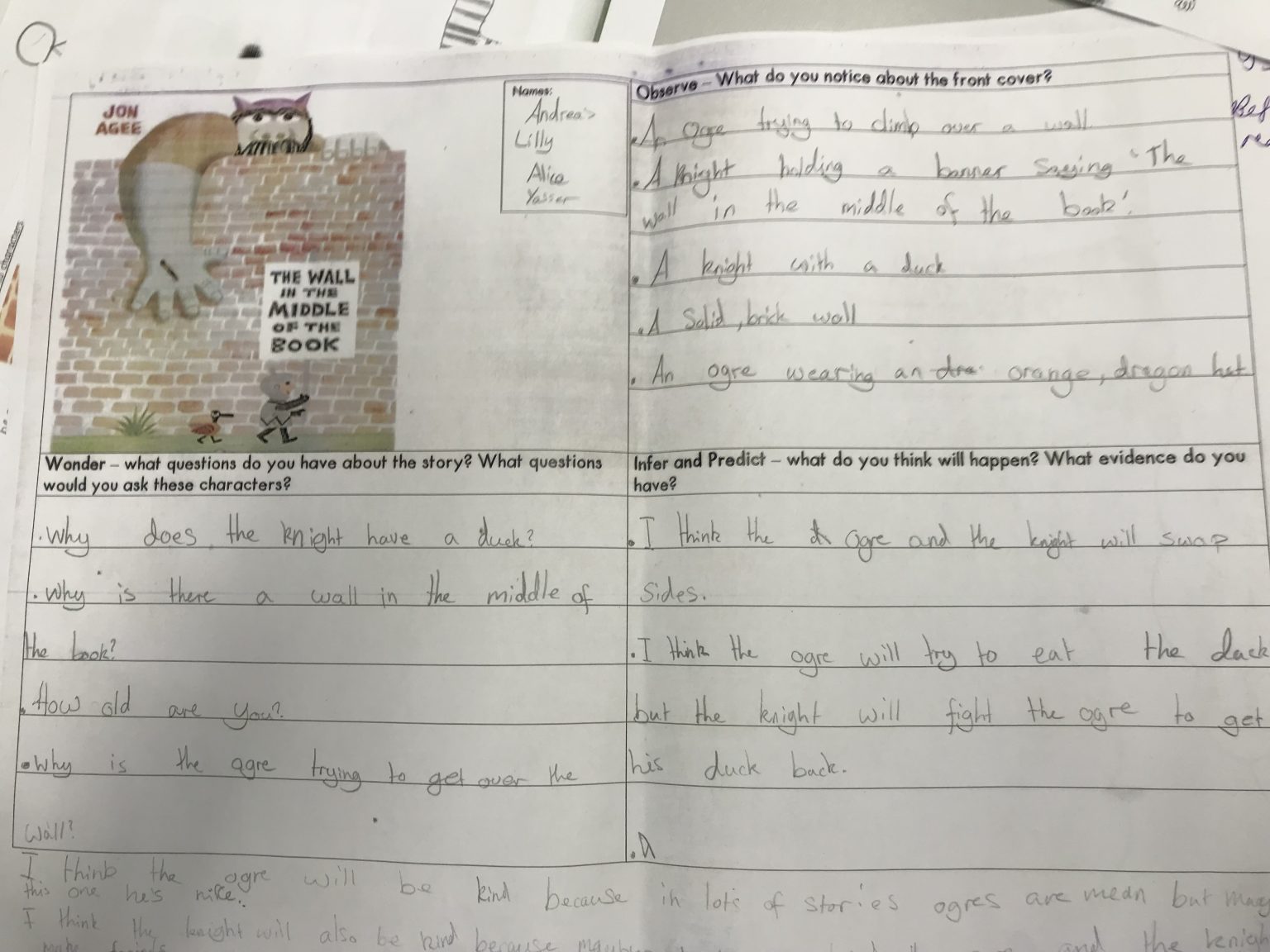
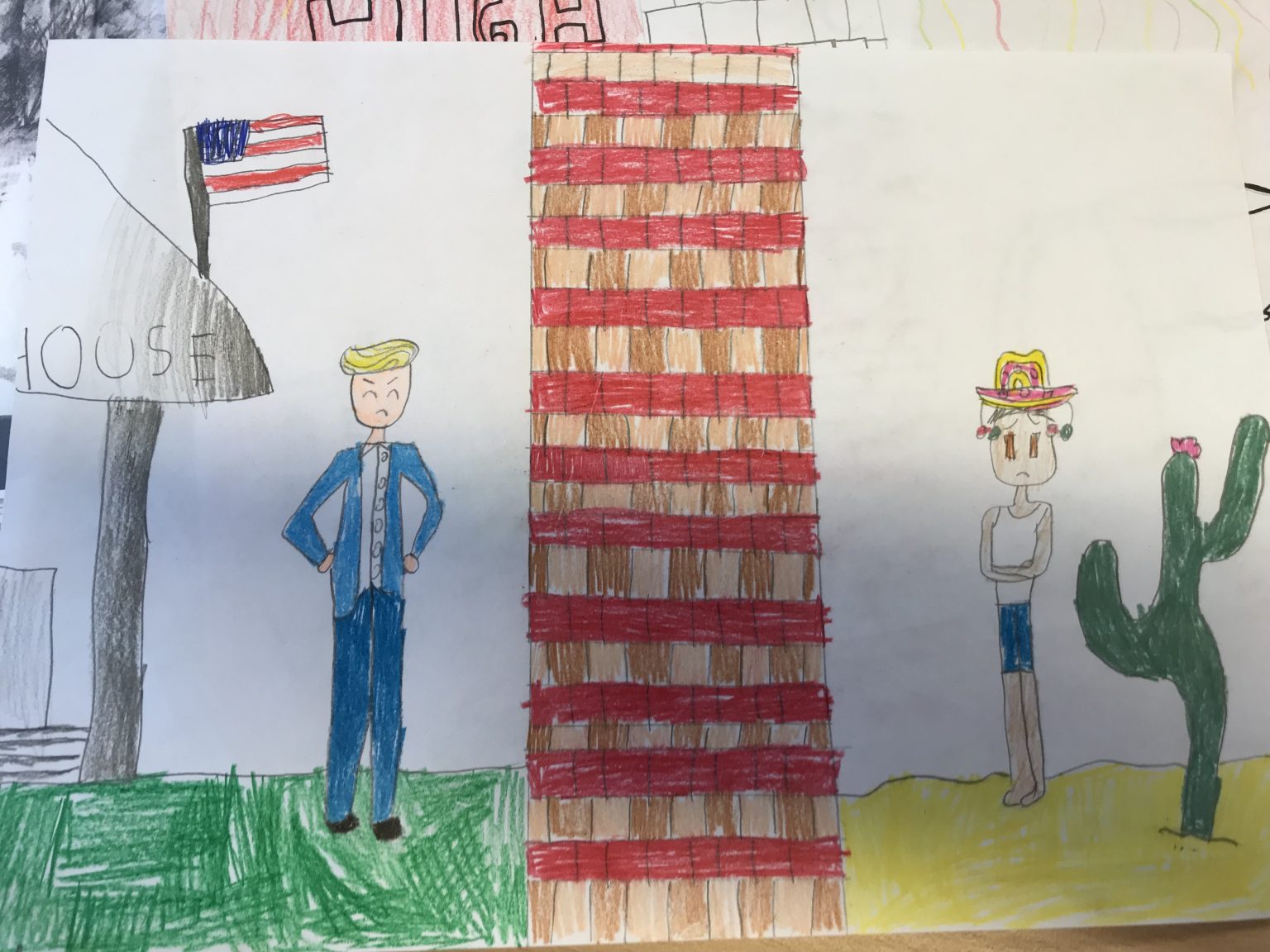
A pupil links the wall to current affairs.

Clockwork Tower (Year 1/2)

This Let’s Think in English lesson develops pupils’ understanding of symbolism through an animated film called: “The Clocktower” by Cara Antonelli. Pupils consider how the girl is feeling in the opening of the film before exploring the symbolism of the film by discussing why the world turns grey and the music suddenly stops and what the girl might do with the balloon. This leads to a consideration of the character’s happiness before the class considers the concept of sacrifice.

This is a transcript [Word document] from a Year 1 lesson in a Greenwich school when pupils are enjoying a whole class discussion. After discussing in groups they are sharing their thoughts on whether or not the girl will remain happy when she returns to the tower.

Download the transcript